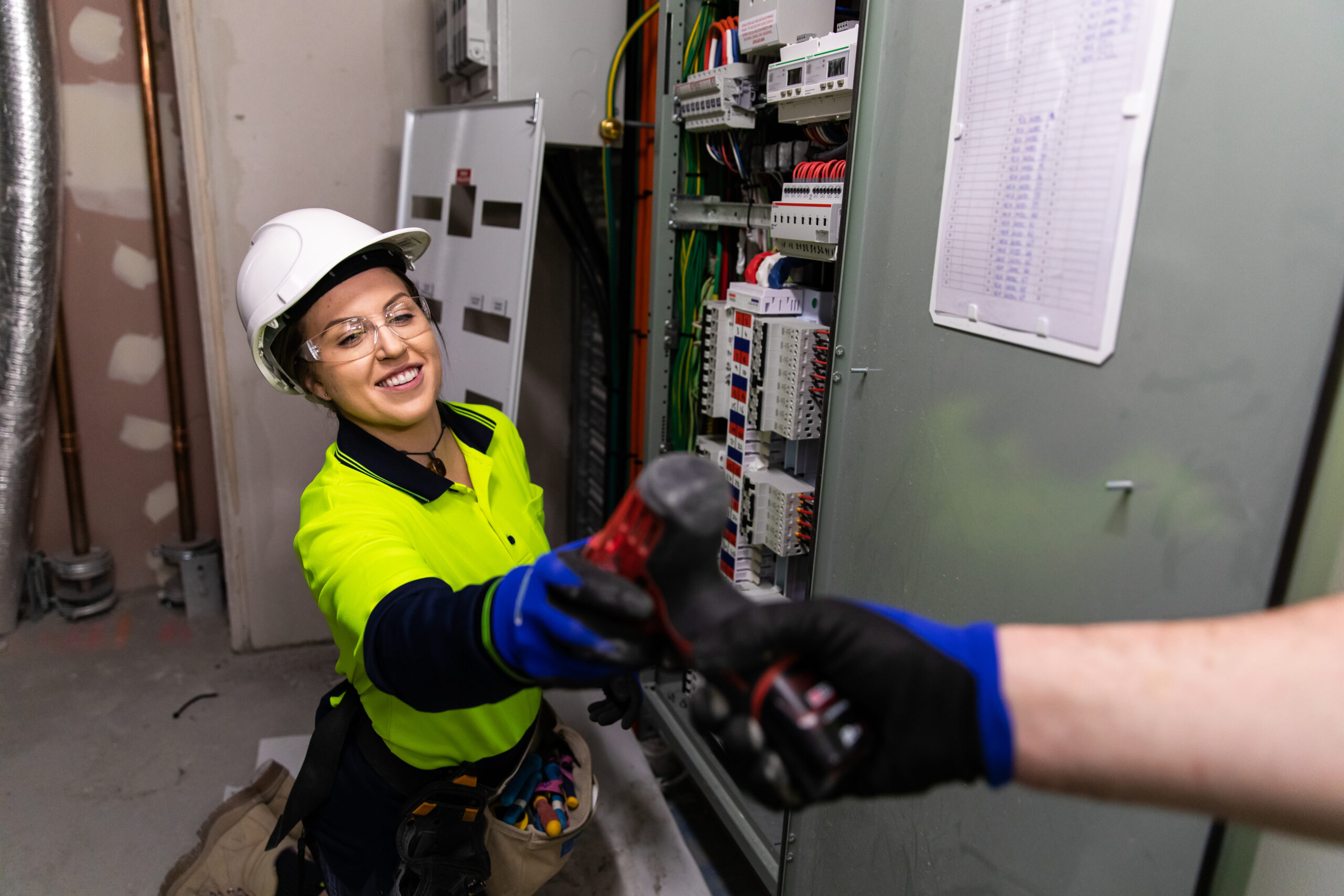
For employers considering an adult electrical apprentice, the question is rarely just about age. It is about dependability, attitude, workplace maturity, and whether the apprentice can contribute positively from the outset. In many cases, adult apprentices can be a strong option for host employers who need someone ready to adapt quickly to site expectations and team routines.
Many adult apprentices enter the trade with previous workforce experience. They may come from construction, warehousing, customer service, defence, manufacturing, or other structured industries. That experience can be valuable. Often, they already understand punctuality, accountability, communication, and how to operate within a team. For employers, this can mean less time spent reinforcing basic workplace behaviours and a smoother transition onto site.
What Is an Adult Electrical Apprentice?
An adult electrical apprentice is generally someone who starts an apprenticeship later than a typical school leaver. They may be changing careers, returning to the workforce, or pursuing a trade after working in another industry. While they are still apprentices and require the same training and supervision as any other, they often bring a different level of maturity and perspective to the role.
For employers, this can be particularly appealing when the business needs someone who is serious about the opportunity and clear on why they are entering the trade.
Why Employers Consider Adult Electrical Apprentices
There are several reasons host employers see value in adult apprentices as part of their workforce strategy.
Maturity on Site
Adult apprentices are often more familiar with workplace expectations from day one. They may already be used to early starts, following direction, taking responsibility, and working alongside supervisors, clients, and other trades. On a busy site, that level of maturity can make day-to-day management easier.
Career Commitment
Many adult apprentices have made a deliberate choice to move into the electrical trade. Because it is often a considered career change, they can bring a strong sense of purpose and commitment. For employers, that can be a positive sign when looking for someone likely to complete their apprenticeship and stay engaged over the long term.
Transferable Experience
Not all prior experience is trade-specific, but it can still be useful. Someone with a background in construction may already understand site safety and jobsite routines. Someone from logistics or manufacturing may be familiar with procedures, compliance, and working efficiently under pressure. These transferable strengths can help an adult apprentice settle in faster.
Stronger Communication
Adult apprentices are often more confident asking questions, taking feedback, and communicating with a wider range of people on site. That can be especially valuable in commercial, industrial, and customer-facing environments where clear communication matters.
Are There Downsides to Hiring an Adult Apprentice?
Like any hiring decision, there are factors employers should weigh up carefully.
Higher Wage Costs
One of the main concerns is cost. Adult apprentices are generally paid at a higher rate than junior apprentices under the relevant award or agreement. For some employers, that can make the decision less straightforward, especially when comparing candidates on labour cost alone.
However, cost should be considered in context. A lower-paid apprentice who needs more supervision, more correction, and longer to adjust may not always offer better value. In some cases, the added maturity and consistency of an adult apprentice can help offset the higher wage cost. Employers comparing the commercial side of hosting may also want to read Electrical Apprentices for Employers in Victoria: Costs and ROI.
Established Habits
Some employers assume younger apprentices may be easier to mould, while adult apprentices may arrive with more established habits or expectations. That can happen, but it depends far more on the individual than on age. A well-screened adult apprentice who is open to learning and understands the apprenticeship structure can still be highly coachable.
Personal and Financial Pressures
Adult apprentices may have mortgages, families, or other financial responsibilities. That can create added pressure, particularly in the earlier stages of an apprenticeship. For employers, this highlights the importance of being clear about wages, working hours, expectations, and long-term opportunities from the beginning.
When an Adult Electrical Apprentice Can Be a Strong Fit
Adult apprentices can be especially well suited to certain host employers and work environments.
They may be a strong fit when your business:
- needs someone dependable and work-ready
- values professionalism and maturity on site
- operates in client-facing, commercial, or higher-responsibility environments
- wants an apprentice likely to commit to the trade long term
- needs someone who can settle into an established team quickly
They can also suit employers that do not have the capacity to constantly manage basic workplace behaviour. While every apprentice needs technical supervision and guidance, some businesses benefit from engaging someone who already understands how to function in a professional environment.
What Employers Should Assess Before Hiring
Rather than focusing on age alone, employers should assess whether the candidate matches the work, team, and level of supervision available.
Motivation for Entering the Trade
Why has the candidate chosen an electrical apprenticeship? A strong adult apprentice can usually explain that clearly. Employers should look for someone who is realistic about the apprenticeship pathway and committed to completing it.
Willingness to Learn
Previous life and work experience can be an asset, but it does not replace the need to learn the trade properly. The right candidate should be coachable, respectful of supervision, and prepared to develop from apprentice level.
Work History and Reliability
An adult apprentice’s previous work history can reveal a great deal. Consistency, accountability, safety awareness, and attendance all matter. Even if their earlier roles were outside the electrical industry, employers should consider whether they have demonstrated the behaviours needed on site.
Suitability for Your Work Environment
Not every apprentice suits every host employer. Consider whether the person is better aligned to residential, commercial, maintenance, construction, or industrial work. The strongest outcomes usually come from matching the apprentice to the actual environment and expectations of the role. Employers who are still refining their hiring approach may also find value in 6 Common Mistakes When Hiring Electrical Apprentices, especially around supervision, expectations, and apprentice fit.
Adult Apprentices and Group Training
For employers who are unsure about taking on an apprentice directly, a Group Training Organisation model can offer a more structured pathway. Under this arrangement, the GTO is the legal employer and manages recruitment, onboarding, payroll, administration, and employment compliance, while the host employer provides the on-site training environment.
This model can reduce administrative pressure while still giving businesses access to screened and supported apprentices. It also allows employers to focus on supervision, skill development, and workforce planning without managing the full employment burden internally. For a clearer overview of how this works, link through to Learn About Group Training.
This can be particularly useful for host employers considering adult apprentices for the first time.
Are Adult Electrical Apprentices Worth Hiring?
For many employers, yes. Adult electrical apprentices can bring maturity, commitment, and transferable workplace skills that make them a valuable addition to a trade team. While wage costs are often higher than for junior apprentices, the broader value often comes down to reliability, attitude, communication, and long-term potential.
The right decision is not about age on its own. It is about whether the apprentice suits your business, workload, and supervision structure. A capable adult apprentice who is motivated, coachable, and committed to the trade can be a strong investment for employers building long-term workforce capability.